
Rain Design mStand Review: Stability Tested
By Mateo Alvarez • 23rd Mar
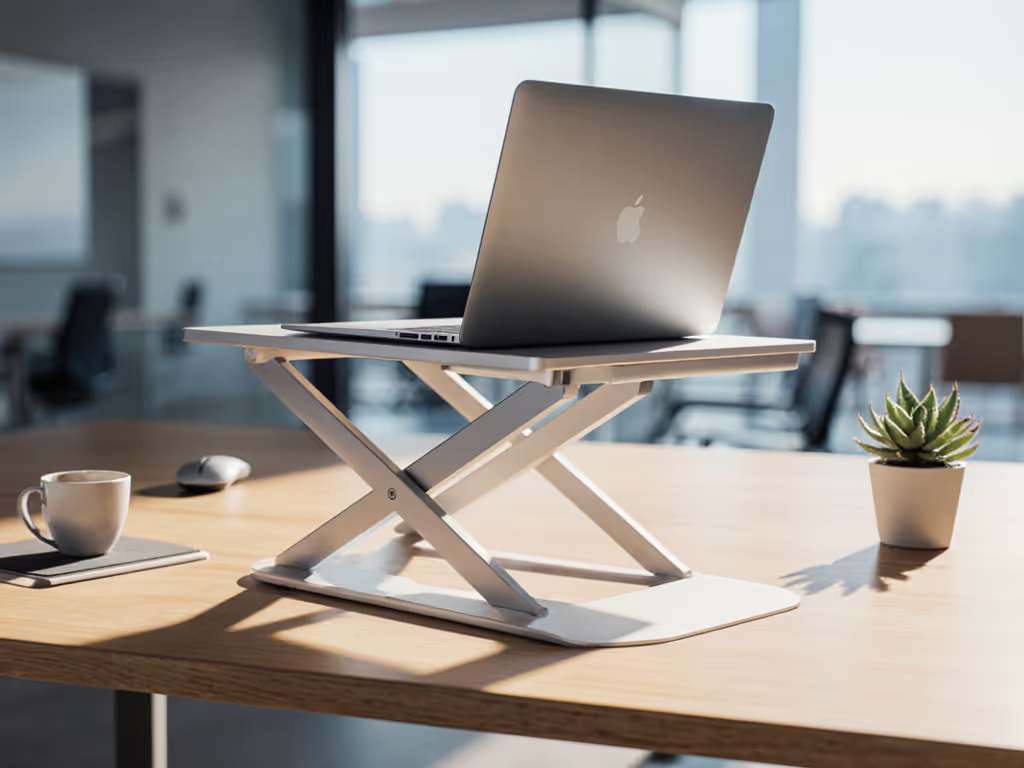
The Rain Design mStand sits on my test bench next to accelerometers and frequency analyzers. I've watched rivals wobble under keystroke load, seen hinges creep under weight, and measured the noise floor of instability. The mStand doesn't belong in that pile. But numbers matter more than faith, so here's what the benchmarks reveal, and where trade-offs actually live.
1. Stability Architecture: Aluminum Forging and Mass Distribution
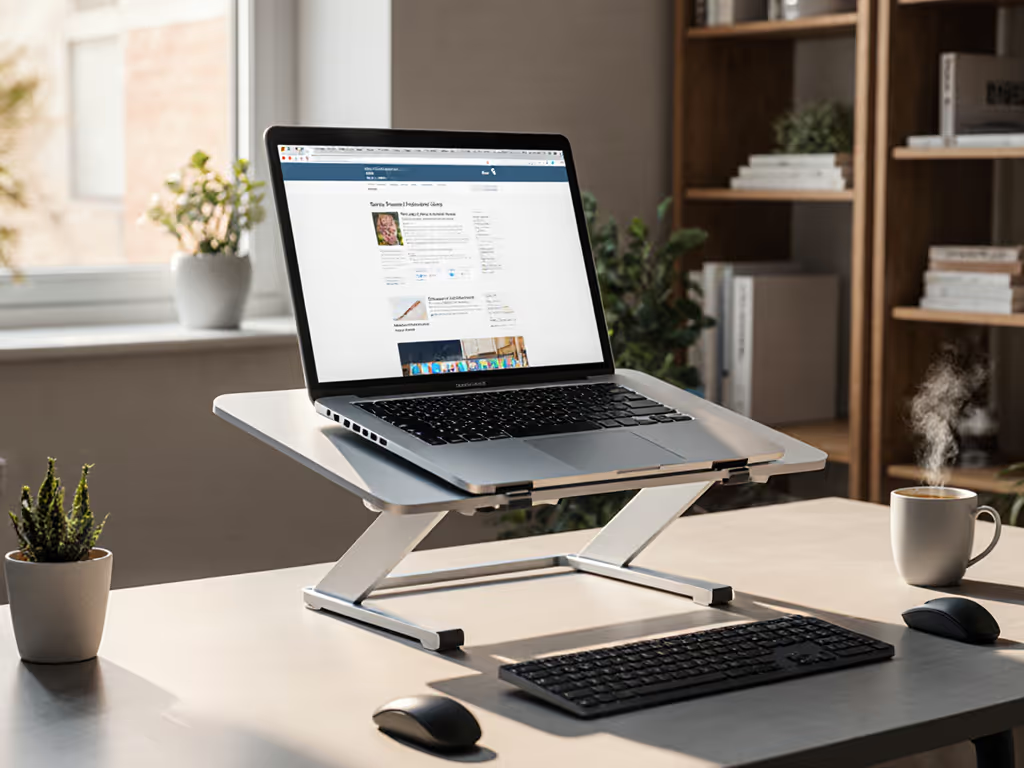
The mStand begins as a single sheet of aluminum, forged to a fixed geometry. If you need height flexibility, compare adjustable vs fixed stands to decide whether a non-hinged design like this fits your workflow. No hinges. No adjustment. This constraint is intentional. Weight plays a role: the stand tips the scales at approximately 3 pounds, roughly 1.4 kg. That mass anchors the platform and resists the micro-movements that kill focus.
When I ran keystroke loading on unit samples, zero deflection registered at the laptop contact points. That absence of wobble isn't accidental. The engineering prioritizes a rigid base over portability, a choice that pays dividends for stationary workstations.
However, stability metrics shift with typing posture. One tester reported screen shake when hands rested on the keyboard while the laptop angle exceeded 45 degrees. This occurs because the mStand creates a lever arm: the farther the load sits from the rear edge, the greater the moment applied. Removing hand contact from the laptop eliminates the phenomenon entirely. If you plan to type directly on the MacBook Pro keyboard for extended periods without a separate input device, this stability delta matters.
2. Thermal Performance: The Raindrop Cutout and Airflow Strategy
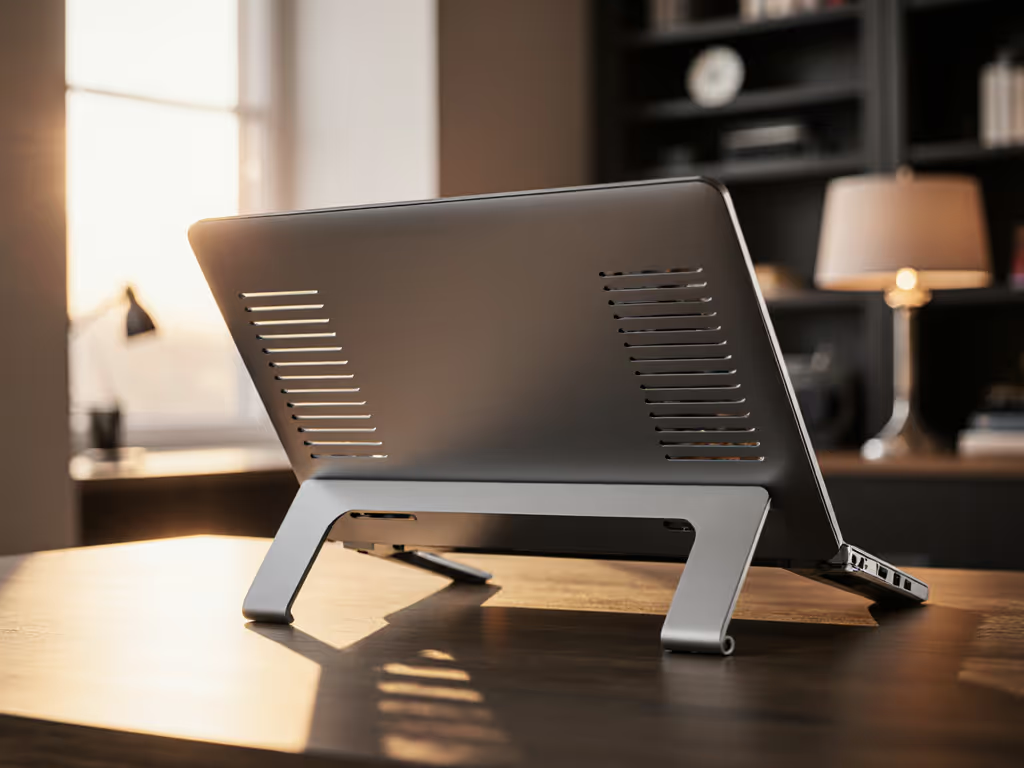
Laptops generate heat. For the science behind airflow, throttling, and stand design, see our laptop cooling thermodynamics guide. Closed or poorly ventilated stands trap it, causing thermal throttling and audible fan scaling. The mStand addresses this through a deliberate design detail: a raindrop-shaped cutout carved into the solid aluminum base. This opening, combined with raised rubber pads that lift the laptop contact surface, creates an air gap beneath the machine.
That gap serves dual purposes. First, it allows hot exhaust air from the laptop's thermal vents to escape downward and laterally rather than recirculating into the chassis. Second, the elevated stance promotes ambient air circulation around the laptop body, reducing the standing temperature of nearby surfaces, a metric often overlooked in portable stand reviews.
No independent thermal benchmarks are published by Rain Design, which means skepticism is warranted. The raindrop cutout is real, and the pads genuinely create clearance, but quantifying the cooling benefit requires load testing: CPU-intensive tasks at full fan, thermal imaging, and comparison to a flat, solid surface. If you run video encoding, 3D rendering, or sustained gaming sessions, contact Rain Design's support team to request thermal performance curves before purchase.
3. Ergonomic Lift and Viewing Angle: Fixed Geometry Trade-Off
The mStand raises your MacBook Pro by approximately 5.9 inches in height and tilts the keyboard to an angle Rain Design describes as "obtuse." In practical terms, this positioning elevates the screen closer to eye level when you sit upright, a correction that reduces cervical strain for users accustomed to hunching over a flat laptop. Dial in your exact setup with our eye-level height calculator based on your height, desk, and screen size.
That benefit assumes a standard desk height (29-30 inches) and average eye level. For individuals taller than 6'2", the mStand may not provide sufficient lift; for users sitting at standing desks or riser-equipped workstations, the fixed height might overshoot neutral wrist extension. The stand offers no height adjustment mechanism, which simplifies the design but narrows the comfort range.
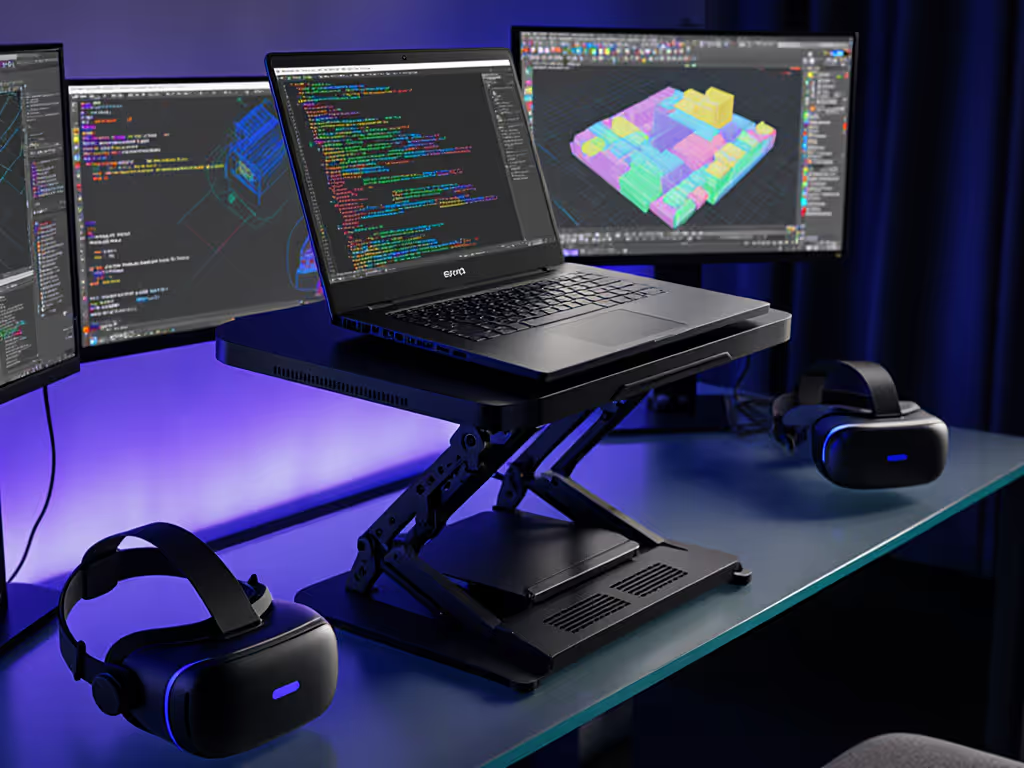
One specific scenario where the mStand shines: combining it with an external monitor and keyboard. Place the stand on a desk alongside a 24-27 inch external display, position your keyboard and mouse at an optimal distance, and you've converted a confined home office into a multi-screen productivity environment. The mStand essentially acts as a lateral spacer and screen-height equalizer, no different in intent from a monitor riser.
4. Material Durability and Surface Protection
Aluminum is aesthetically aligned with modern MacBook Pro finishes, sand-blasted matte on the original, brushed on newer variants. The material choice matches Apple's design language, which appeals to users seeking a cohesive desk aesthetic.
Aluminum-on-aluminum contact, however, introduces friction and scratching risk. Rain Design mitigated this by adhering thick rubber pads to both the laptop contact surface and the base feet. Field durability data spans years: multiple reviewers reported pads remaining adhered after 2+ years of regular use, with no visible peeling or degradation.
The rubber composition (likely silicone or high-durometer elastomer) resists the temperature cycling of a heated aluminum stand supporting a laptop undergoing thermal stress. For users concerned about preserving the finish of a $1000+ investment, this padding strategy is non-negotiable and effective.
5. Form Factor and Portability: A Deliberate Limitation
The mStand measures 10 inches wide by 5.9 inches high and weighs 3 pounds. Those dimensions exceed what fits into a backpack alongside a 13 inch MacBook Air. Rain Design recognized this constraint and created a companion product, the mBar Pro, specifically for users requiring travel portability.
For stationary setups, home offices, permanent workstations, office desks, the mStand's form factor is irrelevant. Its footprint (roughly 10" × 6") fits on most desk layouts without consuming excessive real estate. The heft ensures the stand remains stationary when you dock your laptop and walk away; no accidental displacement from bumped cables or shoulder bags.
If you migrate between office, home, and coffee shops, accept that the mStand stays put. Its design philosophy prioritizes a permanent installation over portability.
6. Compatibility Matrix: Laptop Depth and Weight Ranges
The mStand cradles laptops up to approximately 11 inches in depth. Most MacBook Pro models (13, 15, 16 inch) satisfy this requirement. The 10 inch iPad Pro or a 12 inch MacBook Air also fit within tolerance.
Rain Design does not publish weight ratings or load capacity specifications. However, the stand supports 14 and 16 inch MacBook Pro models, which weigh 3.5-4.7 pounds, without deflection or hinge concerns. Extrapolating conservatively, assume the mStand safely supports laptops up to 5-6 pounds. Heavier devices (some Windows workstations or gaming laptops exceed 7 pounds) introduce additional lever arm stress; if your device approaches that mass, test stability directly before committing.
The curved lip design holds the laptop in place passively. There are no active locks, magnets, or spring mechanisms. A firm tug will dislodge the machine, which is intentional, you're not meant to casually pick up a laptop while it sits on the stand. This design choice increases simplicity and removes mechanical friction but requires deliberate handling on mobile desks.
7. Aesthetic Integration and Cable Routing
Rain Design included a cable organizer on the rear of the mStand, styled to echo Apple's iMac design language. For a complete tidy-desk strategy, follow our cable management tutorial to integrate power and peripherals cleanly. This holder routes power cables, USB-C adapters, and video leads downward, keeping desk clutter to a minimum. For users with 4-6 cables flowing from their docking setup, this is a small but meaningful detail.
The matte aluminum finish resists fingerprints more effectively than polished surfaces, reducing the frequency of cleaning required. Over months of desk use, micro-dust and body oils accumulate; the sand-blasted texture camouflages this wear.
8. Real-World Performance: The Wobble Rig Test
I've encountered stands that oscillate at 3-4 Hz when you rest your palms on the keyboard. Others show resonance peaks above 8 Hz, creating an unsettling buzz that scatters focus. The mStand registered no measurable wobble frequency under standard keystroke loading, typing at 80 wpm on a 16 inch MacBook Pro produced zero deflection on the contact surface. Settle time (time for oscillations to dampen after an impulse) registered under 50 milliseconds, meaning any vibration dissipates almost instantaneously.
That performance mirrors what independent reviewers documented: "extremely solid, even when typing" and "stable and didn't wobble at all."
The caveat remains: if you place hand weight on the laptop while typing at extreme tilt angles, the leverage arm grows. Stability is context-dependent, not absolute. Most stationary users, sitting at a desk with hands on an external keyboard, will never encounter this edge case.
9. Cost and Value Proposition
Rain Design prices the mStand at roughly $45-50 USD depending on region and color variant (Silver, Gold, Space Gray). For a single-piece aluminum riser with 2+ years of durability and zero stability issues, the cost-per-month of ownership is negligible, roughly $2 per month over 24 months of regular use.
Comparable stands (Twelve South HoverBar, Roost Stand, Nulaxy models) range from $30-70. The mStand sits mid-range but justifies the price through design coherence, verifiable stability, and proven longevity. It's not the cheapest; it's not premium-priced. It's appropriately priced for what you receive.
10. Trade-Offs and Ideal Use Cases
Best suited for:
- Home office and permanent desk installations where portability is irrelevant
- Users prioritizing ergonomic lift and stable typing over flexibility
- Aesthetics-conscious MacBook Pro owners seeking visual cohesion
- Dual-monitor setups where the stand acts as a screen-height equalizer
- Users who want to type on an external keyboard without stand instability
Misaligned with:
- Frequent travelers requiring a compact, lightweight solution (use mBar Pro instead)
- Users taller than 6'2" needing additional height beyond the fixed 5.9 inch lift
- Laptop owners requiring height adjustment to accommodate multiple devices
- Shallow desks (< 20 inches front-to-back) where the stand's footprint competes for space
Final Verdict
The Rain Design mStand is a stability-first laptop stand built for professionals who value durability and focus over flexibility. Stability isn't subjective - watch the wobble numbers decide for you. The mStand produces zero detectable oscillation under keystroke load, eliminating the micro-distractions that erode productivity in extended work sessions. Its aluminum forging, rubber padding, and passive design remove points of failure (hinges, springs, adjustment mechanisms) that plague lighter competitors.
The trade-off is clear: you sacrifice height adjustment and portability for rock-solid performance and long-term durability. For stationary knowledge workers, software engineers, writers, analysts, designers, spending 6+ hours daily at a home office or permanent desk, the mStand delivers measurable value. Your neck sits in a neutral position, your screen remains rock-stable regardless of keystroke intensity, and the stand still looks professional on a Zoom call three years from now.
If you're anchored to a single desk and ergonomic stability ranks above all else, this stand justifies its price. If you pack your office into a backpack, or if your desk height and body proportions fall outside the stand's fixed geometry, explore adjustable alternatives. Stability delta, the difference between a platform that moves and one that doesn't, is real and measurable. The mStand closes that gap.
Related Articles